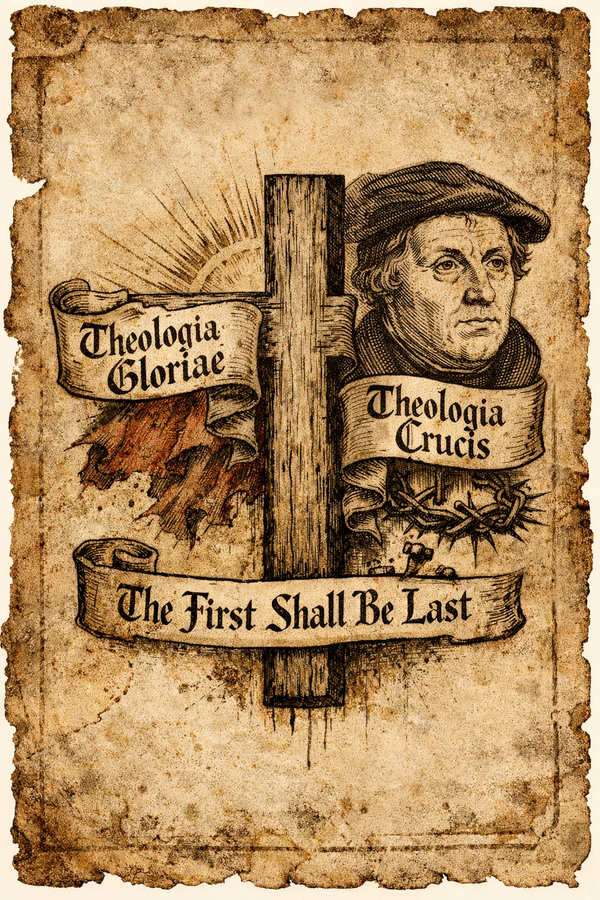
365 or 360 days: The Biblical Grammar of Time
The Sabbath, the Calendar, and the Promise of Restoration
The new year is here. It is a time when people reflect on the past year, make resolutions, and make plans for what lies ahead. We celebrate, we count down, we look forward to a fresh beginning. And we should—there is something deeply human about marking time and hoping for renewal.
Yet for many, once the music stops, another realization sets in. The new year is also the season of income tax declarations, car license plate renewals, registrations and other bureaucratic requirements. We suddenly realize we are not free, but we are living under Big Brother’s boot.
The New Year celebration often makes me feel as though we are living in Aldous Huxley’s Brave New World—a society in which dictatorship wears the appearance of democracy and slaves learn to love their servitude. This is the worst kind of slavery: when a man does not even know he is a slave and instead celebrates his own enslavement.
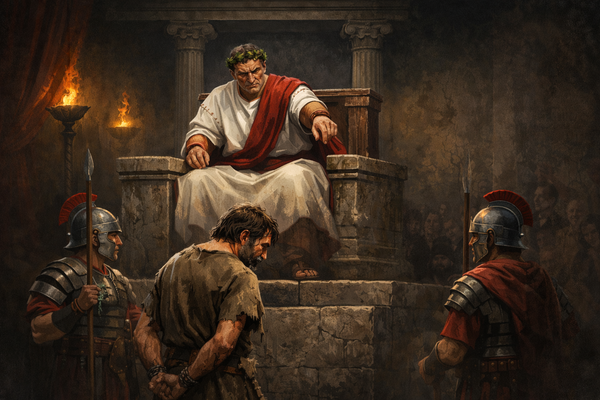
But this is not new. Slavery has taken many forms throughout history. When Mary and Joseph traveled to Bethlehem, they did so not for a holiday, but to comply with a census—an imperial summons that was, in effect, a demand to be counted, assessed, and taxed. Even the birth of Christ took place under the shadow of rulers who claimed authority over time, territory, and people.
The contrast is striking. We celebrate the new year as if time were ours to command, yet Scripture reminds us that time has rulers—and that we often live under them. This raises a deeper question: whose time are we really living in? Imperial time, measured by decrees and demands—or God’s time, ordered by the sun and moon and leading ultimately to the eternal Sabbath?
One of the questions that has always troubled me is why January 1st is the new year in the first place. As a merchant mariner—having studied and practiced celestial navigation and the movements of the heavenly bodies, January 1st has always struck me as strangely arbitrary[i]. It marks neither the beginning of winter nor the renewal of spring. The vernal equinox on March 21st, when the sun crosses the equator into the northern hemisphere and signals the return of life, would seem a far more natural beginning of the year. In fact, the older Roman calendar followed this logic and began in March. We still carry traces of that older calendar in our language: September means “seventh,” October “eighth,” November “ninth,” and December “tenth.” How, then, did January 1st come to stand at the head of the year?
It began when the Roman Empire needed to administer an empire. The Julian calendar was, as the name implies, created by Julius Caesar, Rome’s first dictator for life. He wanted to rule time instead of being ruled by time. Biblically, however, time was governed by the heavens as it says in Genesis 1:16.
And God made the two great lights—the greater light to rule the day and the lesser light to rule the night—and the stars.
Time was not to be controlled by man. When Daniel speaks about the ruler of the fourth beast, he says in Daniel 7:25:
He shall speak words against the Most High, and shall wear out the saints of the Most High, and shall think to change the times and the law; and they shall be given into his hand for a time, times, and half a time.
When Daniel spoke to Nebuchadnezzar about the true God, he said in Daniel 2:20-21.
Daniel answered and said: “Blessed be the name of God forever and ever, to whom belong wisdom and might. He changes times and seasons; he removes kings and sets up kings; he gives wisdom to the wise and knowledge to those who have understanding;
Here Daniel reveals who has authority to change times and seasons. We are under that authority not over it. God rules time, not man. He has given us two visible governors—the sun and the moon. The stars are not rulers but signs.
Even though Julius Caesar reformed the calendar by decree, he failed to account for the extra 11 minutes in the true length of the solar year. That small error accumulated over centuries, eventually requiring a major correction in the 16th century—when Pope Gregory XIII instituted the Gregorian reform. Whether it is Julian or Papal—it is still a Roman imperial reckoning of time.
The Biblical Calendar
The Bible uses a luni-solar calendar that seeks to honor the two governing lights God established—the sun and the moon (Gen. 1:14–18). These two cycles cannot be perfectly synchronized without periodic adjustment, and a calendar that requires periodic adjustment is not defective. It is descriptive of what is. The lack of perfection tells us something is broken. Time is broken and needs to be fixed. If the fall brought death and decay, is it any wonder that time itself would manifest this brokenness. That we are under time and not over it is a result of the fall. All mankind is under a sentence of death. The clock is ticking.
The periodic adjustment is required because the solar year is about 365.24 days, while a lunar year—twelve lunar months—is only about 354 days. The Hebrew calendar adjusts for this by inserting an intercalary month when needed, keeping the lunar months in step with the solar seasons. It is not perfect, but that is the point. Life itself needs adjustment, and the process is often messy just like the calendar. The adjustment of the calendar is a reset, and likewise our salvation too is often framed as a reset. We go from chaos, sin, and death that is reset to a new creation, new obedience and eternal life.
In its earlier practice, this intercalation was guided by observation of the seasons and by communal, pastoral judgment rather than by a fixed biblical rule. Scripture prescribes the feasts and their seasons, but not a formal calendrical mechanism for maintaining alignment. The Bible did not teach a regulative principle of calendar adjustment. Only later—especially in the Second Temple period—did rabbinic authorities begin to systematize and standardize the process.
Just as Rome was consolidating power through administrative standardization, so too were Israel’s religious elites consolidating authority through religious standardization. What begins with order often becomes control; what begins with control soon becomes centralized power. By the time of Jesus, both empire and the Jewish religious establishment had learned to rule not only land and labor, but time itself.
The Ideal Solar Year
The commonly referenced 360-day year is not a natural astronomical year but a schematic or ideal year, rooted in ancient astronomical and mathematical practice[ii]. It is what mathematicians call a highly composite number which means it is highly divisible. One of the great revelations God has given to man is the movements of the heavenly bodies. All ancient cultures studied the heavens, and many worshiped the astral bodies as gods. Psalm 19 says that the heavens declare the glory of God, yet man in his corruption turns away from that revelation.
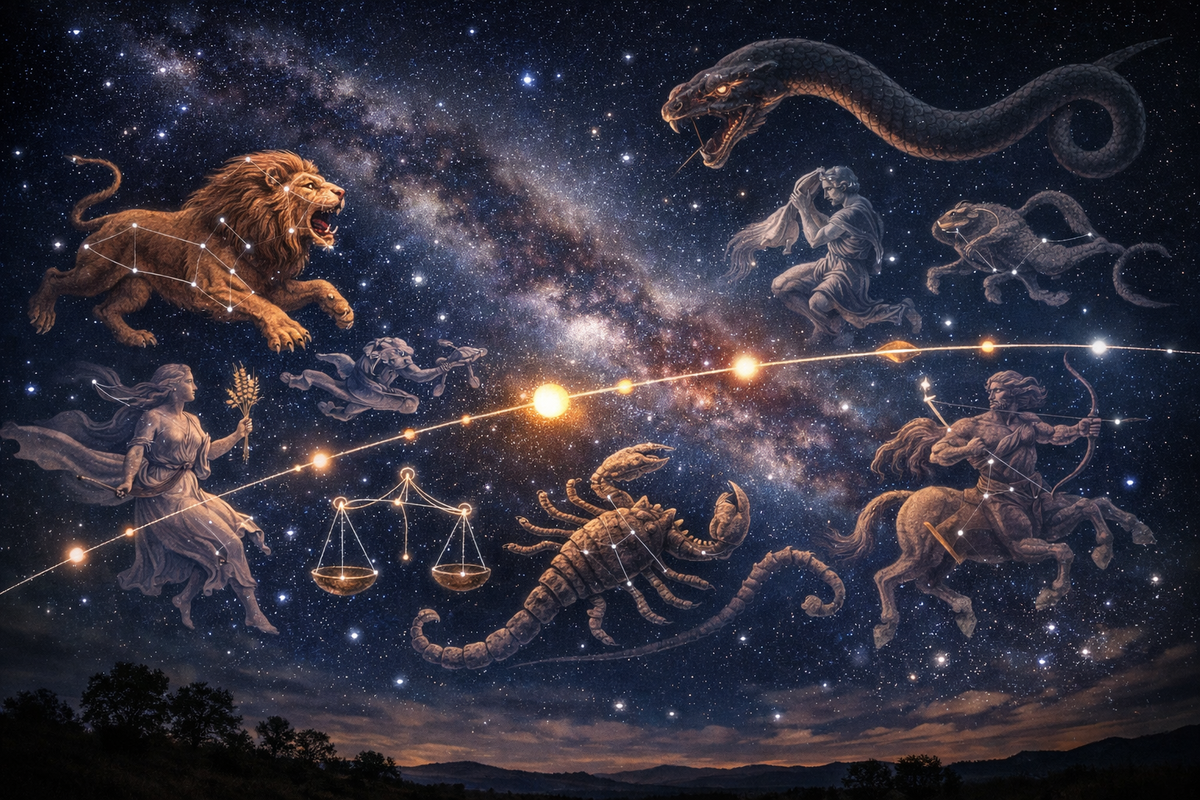
To organize the heavens in a mathematical and orderly way without fractions the ancients used the highly composite number 360. They divided the heavens into 12 by 30-degree segments. The number twelve is mathematically rich: it is divisible by 1, 2, 3, 4, and 6, making it exceptionally practical for measurement and division. The 12 divisions are known as the Zodiac that follows the ecliptic which is the path the sun makes in the heavens relative to the stars. The constellations that reside in those 12 divisions are called the signs of the Zodiac[iii].
Multiples of twelve amplify this usefulness. Sixty (12 × 5) is divisible by 1, 2, 3, 4, 5, 6, 10, 12, 15, 20, and 30, which is why ancient cultures adopted the sexagesimal (base-60) system for time and angles. Thirty-six (3 × 12) is divisible by 1, 2, 3, 4, 6, 9, 12, and 18, further reinforcing its utility.
We still rely on this system today. A circle has 360 degrees; a compass has 360 degrees, navigation uses 90 degrees of latitude and 180 degrees of longitude; and time itself is structured around base-60 divisions (60 seconds, 60 minutes). These conventions preserve ancient numerical grammar that prioritizes divisibility, order, and harmony rather than absolute synchronization.
This is, of course, conjecture, but is it possible that before the Fall the solar–lunar calendar was not in need of adjustment? If the Fall brought decay, disorder, and death—and was, in a sense, a kind of creation in reverse, a return to the chaos at the beginning—then perhaps the calendar too was subjected to this disorder. In Hebrew, the word for chaos is tohu va-bohu; thus, our present calendar may represent this condition of chaos. The various resets, then, become necessary because of the Fall. Scripture’s constant reference to a 360-day year may therefore mark a promise of the eventual healing of time itself. The Scripture then uses Edenic time instead of fallen time. The resets are reminders of the fall and a promise of restoration by a Redeemer.
The Weekly Cycle
Having seen why the Bible and many ancient cultures used the ideal year instead of the actual solar year, it is now time to look at the weekly cycle. Every culture organizes time based on a week of 7 days, but this arrangement has no astronomical significance. Four weeks make up 28 days, which is not quite a lunar month. The only other 7-day pattern we see is the 7 days of creation. This convention of the seven-day week has universal acceptance and confirms that it is of primal origin.
The seventh day, however, is unique from the other days. The seventh day ends without a morning and evening clause. Some have wondered if the Sabbath day ever ended. It says in Genesis 2:1-3
Thus, the heavens and the earth were finished, and all the host of them. And on the seventh day God finished his work that he had done, and he rested on the seventh day from all his work that he had done. So, God blessed the seventh day and made it holy, because on it God rested from all his work that he had done in creation.
When this is compared with what the book of Hebrews teaches on the Sabbath, we see the same open-ended Sabbath. It says in Hebrews 4:8-10
For if Joshua had given them rest, God would not have spoken of another day later on. So then, there remains a Sabbath rest for the people of God, for whoever has entered God’s rest has also rested from his works as God did from his.
Eden was Created Perfect
The sabbath rest of the 7th day then is a signal of completion or telos. When God rested after the days of creation, it was complete and not in need of any improvement. God created Eden perfect. It was not designed to fail, nor did God desire it to fail. The Bible is clear in teaching that God does not create evil. Evil is a privation of the good, and it only comes from the creature. If decree language is used to describe the fall of man, it is often framed as a permissive decree in order to preserve the biblical teaching of God’s holiness and goodness. God is not the author of evil, but He did permit it.
Post Fall Sabbath
If God rested from His works of creation, it would seem then that Adam and Eve in Eden were in the same state of rest. There was no need to perfect anything—Eden was perfect. If sabbath signals telos or perfection, then there would be no need for a weekly sabbath because they lived in an everlasting Sabbath.
When Adam fell, the world was no longer at rest—it was heading back towards chaos. (tohu va bohu) The fall introduced a backwardation into the days of creation. It was returning to the state of chaos.
It says in Genesis 1:1-2
In the beginning, God created the heavens and the earth. The earth was without form and void, and darkness was over the face of the deep. And the Spirit of God was hovering over the face of the waters.
This is at the beginning of creation. Rest or Sabbath only happened at the end of God’s creative work—the 7th day. Sin broke the completeness of creation which means the Sabbath was now broken thus necessitating a re-Genesis to get back to completion.
The Weekly Sabbath as Promise
The first recorded instance of a weekly sabbath was in the book of Exodus. The fourth commandment says that Israel was to remember the sabbath which means it was not something new. It appears that it was implemented after the fall as a promise of a future rest. The weekly sabbath observance then was a pedagogical and liturgicalencoding of the promised redemption of Genesis 3:15. The sabbath functioned as a reset—a disruption of time to get time and creation back in order. By celebrating a weekly sabbath it provided a telos of time—an eschatological goal of the cosmos.
Extra Sabbaths Were Added
The Mosaic Covenant added additional resets or sabbaths to the liturgical calendar.
1. Unleavened Bread (Passover week) — the first and seventh days are commanded days of rest (“no ordinary work,” Lev 23:7–8), making them festival sabbaths tied to redemption.
2. Feast of Weeks (Pentecost) — declared a holy convocation with cessation from labor (“you shall do no ordinary work,” Lev 23:21), functioning as a sabbath-rest day.
3. Feast of Trumpets — explicitly called a sabbath (shabbaton, “solemn rest,” Lev 23:24), a liturgical reset of remembrance.
4. Day of Atonement — directly named “a sabbath of solemn rest” (Lev 23:32), the deepest spiritual reset in Israel’s calendar.
5. Feast of Booths (Tabernacles) — both the first and eighth days are commanded days of solemn rest (Lev 23:35–36, 39), making two festival sabbaths of pilgrimage.
6. The Sabbatical Year — the seventh year is called “a sabbath of solemn rest for the land” (Lev 25:4), extending sabbath from days to years.
7. The Jubilee — built on sabbatical cycles and proclaimed holy (Lev 25:10–12), functioning as a national sabbath-reset of land, labor, and liberty. This is a seven times seven or forty-nine year reset with a whole year of rest as a sort of sabbath of sabbaths--the fiftieth year.
All of these were in addition to the weekly sabbaths. Each one marks an aspect of God’s redemption of Israel. It was a redemption from Egypt, from slavery, from sin, from fear, from landlessness, and from debt. This liturgical calendar was a pedagogical embodiment of the Gospel. The purpose was to teach Israel about resting in the Everlasting Arms of their Redeemer and not in their own works.
New Testament Sabbath
When we get to the New Testament, we do not see a restatement of the Ten Commandments in a list. We see the Beatitudes, the fruit of the Spirit, and the command to love. The Ten Commandments are not absent, but they are interspersed throughout. Surprisingly, the fourth commandment is not explicitly commanded in the New Testament. Some have used the exhortation in Colossians to argue that the Sabbath only belonged to the Old Testament and is done away with in Christ.
It says in Colossians 2:16
“Therefore do not let anyone judge you by what you eat or drink, or with regard to a religious festival, a New Moon celebration or a Sabbath day.”
This is one possible way to look at the Sabbath, but when you remember the additional sabbaths of the Mosaic calendar, this passage appears to be speaking specifically of those sabbaths and not the weekly Sabbath.
If we remember the reason for the Sabbath, we can see that Christ did not abolish it but transformed it. There still remains a sabbath rest for the people of God as it says in the book of Hebrews. Christ’s redemption is “already but not yet.” We have been redeemed; we are being redeemed, and we will be finally redeemed in the eschaton when our bodies will be resurrected. The final rest has to wait until the last day—thus the weekly sabbath is the remaining promise of that final restoration. Christ fulfilled the typology of the Mosaic Covenant, but He did not bring the final rest yet.
Covenantal Administration of the Sabbath
I believe the rigid enforcement of Old Testament Sabbath regulation has been abolished as well[iv]. The New Testament gives no detailed guidance as to how the Sabbath[v] or the Lord’s Day is to be kept other than to attend worship and love your neighbor. It is a time for fellowship and formation.
If the civil laws concerning Sabbath enforcement are no longer binding, then this necessarily loosens New Testament Sabbath practice. Really—is anyone today going to be stoned for lighting a fire in the camp? It was the religious leaders of Jesus’ day who insisted on a strictly enforced Sabbath. In the Mosaic period, Sabbath regulations were typological, and to break the Sabbath was to violate that gospel proclamation. It would be like preaching a false gospel.
The Jews of Jesus’ day were not living in the Mosaic period—they were under the exilic period that had already loosened the Sabbath enforcement. Jeremiah explicitly says this in Jeremiah 29:7
“But seek the welfare of the city where I have sent you into exile, and pray to the LORD on its behalf, for in its welfare you will find your welfare.”
The exilic period was not the same as the Davidic. Israel was under Gentile suzerainty and no longer had the authority to enforce the Mosaic civil law. The principle is that Sabbath observance changes according to its covenantal administration: different epochs have different administrations. The New Testament Sabbath is therefore not the same as the Mosaic, Davidic, or Exilic Sabbath.
The New Testament’s relative silence suggests that the Sabbath has become more eschatological than external and physical. This is not to deny that the Old Testament Sabbath was spiritual or forward-looking, but to say that its particular mode of enforcement was pedagogically necessary in its time—as a means of proclaiming the gospel through covenantal and liturgical practices.
The Elementary Principles of the World
When Paul says in Galatians 4:9-11,
But now that you have come to know God, or rather to be known by God, how can you turn back again to the weak and worthless elementary principles of the world, whose slaves you want to be once more? You observe days and months and seasons and years! I am afraid I may have labored over you in vain.
The elementary principles here seem to be speaking of the Mosaic calendar festivals and sabbaths. These have been done away with in Christ. He set us free from the yoke of the ceremonial law. He did not, however, set us free from the bondage of time. We will still die, and the sun and moon as timekeepers still rule over us.
This was not the case in pre-Fall Eden. There the sun and moon had no power over mankind because there was no death. The bondage to these timekeepers is the backwardation of the created order. It is a returning of creation back to chaos. It was a judgement upon mankind that the dominion was reversed. Instead of being over creation, mankind was put under creation. Instead of unlimited time, now time is ticking and signaling our eventual decay and return back to dust.
I believe the New Testament Lord’s Day or Sabbath is a promise of final victory over this loss of dominion. Christ’s fulfilling of the ceremonial Mosaic calendar is an “already victory” over the slavery of time, but it is not complete until death itself is swallowed up in victory.
The New Jerusalem
On the last day in the new heavens and the new earth we see that victory come to fruition:
As it says in the book of Revelation 21:22-23
And I saw no temple in the city, for its temple is the Lord God the Almighty and the Lamb. And the city has no need of sun or moon to shine on it, for the glory of God gives it light, and its lamp is the Lamb.
Here at last the dominion of the sun and moon are no more. Time itself is no longer our ruler, and we walk in the light of the Lamb of God. The New Jerusalem appears as a cube of the dimensions of 12,000 stadia square. Its walls are 144 cubits. Cubes are tied into sacred geometry. The angles add up to 360 degrees. 144 is 12 times 12. All this adds up to perfection—the promised sabbath rest expressed in geometric grammar.
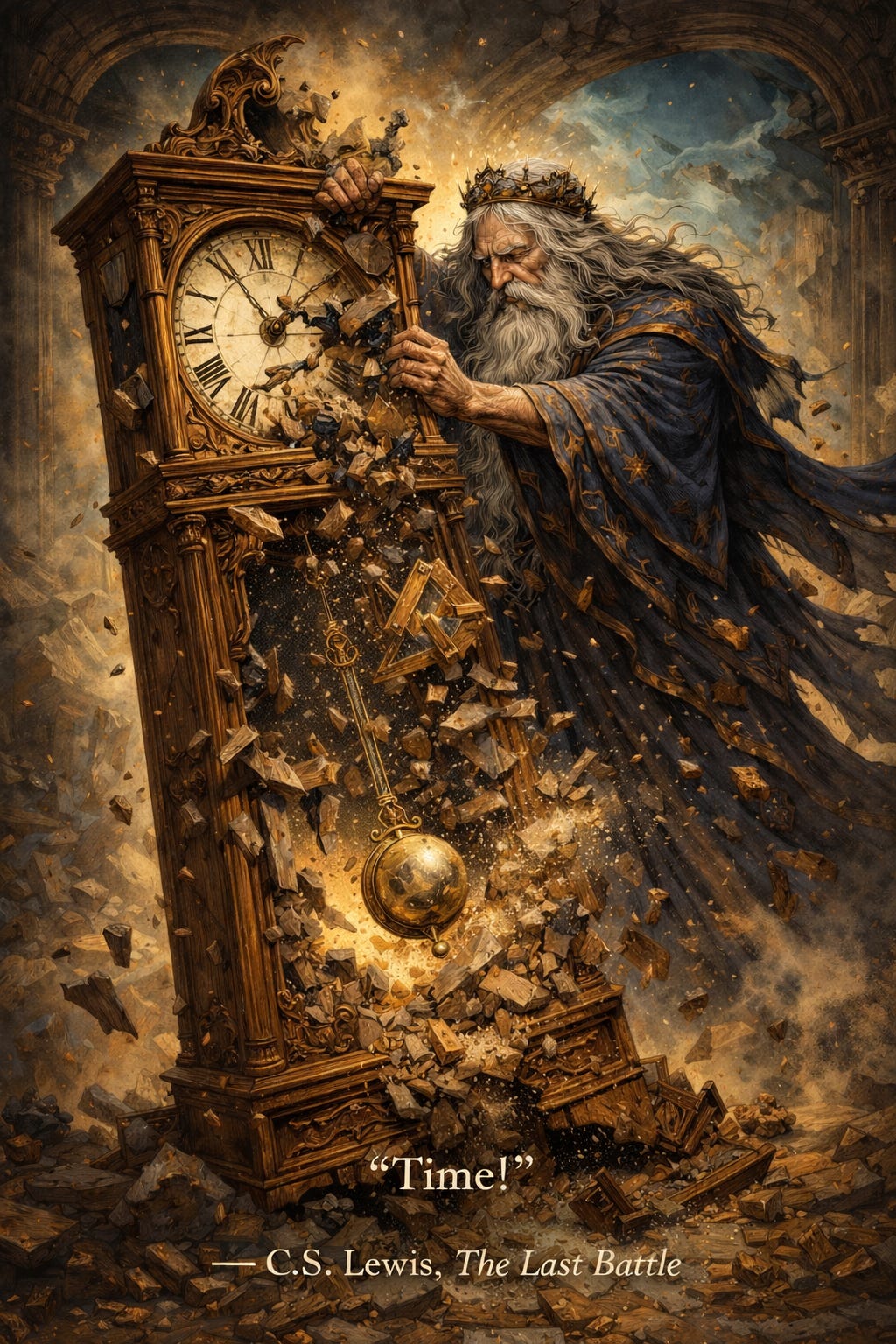
In C.S. Lewis’ book “The Last Battle,” Father Time breaks the clock and ushers in eternity. There at last, we will be at rest. The rest that our first parents Adam and Eve had before the Fall is now brought back, but now even more glorious than they could ever imagine. Time is no more! All the Redeemed enter the rest promised in the book of Hebrews. Amen!
The 360-day year Summarized
Today we live in a 365-day year solar calendar with leap years to keep it aligned with the sun. In prophetic and narrative accounts the Bible consistently reckons the year as 360 days. Whether it is in Genesis or the book of Revelation’s “times, a time and a half a time,” forty months or 1260 days, the year is still reckoned as 360 days. It is an idealized time that requires a reset. This I argue is a revelation of our broken world. The sabbath resets and the calendar resets tell us about the need for redemption. Even the solar calendar we live under still requires a reset. Perfect time would not need to be reset. The sabbaths and the calendar resets then are typological of God’s promised final reset—the consummation of all things.
If we look at the other numbers in the Bible that resist perfection we see a pattern. The twelve tribes of Israel or the thirteenth if you count Jacob’s adoption of Manasseh and Ephraim. The Beatitudes—is it seven, eight or nine? The Apostles is it twelve, thirteen or fourteen if you count Paul? Is The Lord’s Prayer six petitions or seven? Why are the twelve tribes in the book of Revelation different than in the book of Genesis? (Dan is omitted). All these imperfections tell us something—the world is broken.
Celebrating the sabbath today should be done with the telos of the sabbath in mind—the promised rest is coming. Nothing can stop its ultimate fulfillment. We should “keep” the sabbath holy because it is our Blessed Hope.
S-U-N time and S-O-N time
Mary and Joseph lived under S-U-N time—under imperial rule, under censuses and taxes, under the heavy hand of Rome. They submitted to the authorities God had placed over them, yet they also lived by a deeper hope. For they knew that another time was breaking into history: S-O-N time. And when the Son was born in Bethlehem, it marked a quiet but decisive rupture in the system of control that claimed to rule the world.
So, it is with us. We live in the already and the not yet. We still live under sun-time—measured by decay, obligation, and the ticking clock. Yet we also live under Son-time—marked by grace, promise, and the coming reign of Christ. One day, sun-time will give way entirely to Son-time. And when it does, the Sabbath we now keep by faith will become the eternal rest we will enjoy by sight.
Amen
Appendix on Eschatology
This is just a personal meditation about the consummation of all things and not meant to be a dogmatic statement about the end times[vi].
The Thousand Year Reign
Daniel 7:25-27
He shall speak words against the Most High, and shall wear out the saints of the Most High, and shall think to change the times and the law; and they shall be given into his hand for a time, times, and half a time. But the court shall sit in judgment, and his dominion shall be taken away, to be consumed and destroyed to the end. And the kingdom and the dominion and the greatness of the kingdoms under the whole heaven shall be given to the people of the saints of the Most High; his kingdom shall be an everlasting kingdom, and all dominions shall serve and obey him.
How do we know where we are in prophetic time? We are still living, in many ways, under Roman time—shaped by a calendar that descends from imperial authority. From the book of Daniel we see that there is a day coming when the kingdoms of this world will be given to the saints of the Most High.
For now, we live under sun time—solar time—but the Son has already broken the bondage of that dominion. Soon we will live in the fullness of Son time. This season of church history is spoken of in the book of Revelation: it is the time of the “already” and the “not yet,” as we await the final unveiling of Christ’s kingdom.
Revelation 20:4-6
Then I saw thrones, and seated on them were those to whom the authority to judge was committed. Also I saw the souls of those who had been beheaded for the testimony of Jesus and for the word of God, and those who had not worshiped the beast or its image and had not received its mark on their foreheads or their hands. They came to life and reigned with Christ for a thousand years. The rest of the dead did not come to life until the thousand years were ended. This is the first resurrection. Blessed and holy is the one who shares in the first resurrection! Over such the second death has no power, but they will be priests of God and of Christ, and they will reign with him for a thousand years.
This appears to be a different time than all that has gone before. The thousand years is an intriguing symbolic period: 10 times 10 times 10—a perfect cube—and thus a sign of the fullness of time. If one considers the angular measurements of the four corners—90 plus 90 plus 90 plus 90—the sum is 360, which in this essay has been called Edenic time.
How can such a time of fullness be concurrent with the “times of the Gentiles” and the fourth beast’s 1,260-day reign? This question cannot be settled here. The present conclusion is offered only through the use of the calendar as a tool of prophetic reflection, not as a final system of interpretation. Certainly, much more work remains to be done in order to understand the biblical grammar of time.
This paper is therefore only a humble investigation into a complex subject. Whoever finally resolves this riddle, I contend, will need to be well-versed both in the symbolic use of numbers in Scripture and in the theological significance of the 360-day time pattern.
[i] I was trained in celestial navigation—an ancient navigational science that determines position by observing the sun, moon, and stars. In the course of that training, I learned to use the sextant to take angular measurements of celestial bodies and then calculate a line of position. With several observations, it was possible to get a triangulated position on a chart. Sometimes in the practice of celestial navigation with the right atmospheric conditions a position can be obtained that is the same as the satellite GPS system. Such knowledge was once common but has been largely neglected today. Yet in an unexpected way this knowledge is returning, as a simple cell phone can display the ecliptic and the movements of the heavens. This reminds us that this ancient grammar of the skies is not lost but just neglected.
[ii] The mathematical prominence of numbers such as 60 and 360 is not arbitrary or merely symbolic; it reflects patterns that appear throughout the natural world. Both are highly composite numbers, meaning they possess an unusually large number of divisors, which makes them especially suited for measurement, proportion, and harmony. This is why ancient cultures consistently used base-60 systems for time, angles, and navigation—and why these systems remain in use today.
Nature itself exhibits similar ordered patterns. Snowflakes form with sixfold symmetry; musical harmony is structured around numerical ratios; crystalline forms, orbital motions, and wave patterns all display recurring mathematical regularities. What is sometimes called sacred geometry is simply the recognition that creation bears an intelligible order that can be described mathematically. To observe this is not to endorse mysticism or astrology, but to affirm with Scripture that “the heavens declare the glory of God” (Ps. 19:1). The use of numbers such as 60 and 360 in biblical and ancient thought therefore reflects not superstition, but an intuitive awareness that the world itself is structured by proportion, rhythm, and design.
[iii] A Note on the Zodiac: The Zodiac is of ancient origin, and the Bible itself speaks of the constellations (Job 38:31–32). Very early on, however, what began as simple observation of the heavens was transformed into superstition—the belief that human lives are governed by the stars. That development stands in clear tension with Scripture, which teaches that God alone rules over human history.
At the same time, there has been a line of thought, followed by some Christian writers, that has sought to explore whether the Zodiac once carried a different kind of meaning. Dr. D. James Kennedy, for example, wrote a book called The Real Meaning of the Zodiac, suggesting that some ancient star patterns may have been understood as a symbolic representation of the Gospel if however dimly revealed. Whether or not one finds such reconstructions persuasive is not the point here, and no judgment is offered in either direction.
[iv] Note on Sabbath Enforcement and Christian Liberty
In speaking of the Sabbath in this essay, I do not intend to weaken it, but to place it within its proper redemptive-historical and covenantal setting. The rigid enforcement of Mosaic Sabbath regulations belonged to Israel’s theocratic administration and included a complex of laws that were not purely moral, but largely ceremonial and judicial in character.
The Reformed tradition has consistently taught that the ceremonial laws have been fulfilled in Christ and are therefore no longer binding on the Church, and that the judicial laws of Israel expired with that nation, except insofar as their general equity continues to inform Christian wisdom. What remains permanently binding is the moral substance of God’s law—including the call to rest in Him, to worship Him, and to order our lives toward His glory.
[v] The New Testament does not explicitly command the observance of a seventh-day Sabbath in the same way the Mosaic law did, but it does speak of the Lord’s Day and records the Church gathering on the first day of the week (e.g., Acts 20:7; Rev. 1:10). In that sense, the rhythm of sacred time is not abolished but reoriented.
If Sabbath means “seventh,” it is fitting that the day of rest in the new creation order should be renamed—not because rest is lost, but because its meaning has shifted. The day no longer looks back to the completion of the old creation, but forward from the resurrection of Christ, marking the beginning of the new creation week rather than the end of the old one.
[vi] Note to the Reader
The reflections in this essay on the consummation of history and the “thousand years” are offered in a spirit of theological hope rather than dogmatic certainty. The early Church often spoke with confidence about a coming season of gospel prosperity—a time when the reign of Christ would be more visibly displayed in the conversion of the nations. In later centuries, especially after Augustine, the Church learned to speak more cautiously about the millennium, emphasizing the present reign of Christ and resisting speculative timetables.
My own instincts stand somewhere within that older hope, though without dogmatism. It seems to me that we still live largely under what this essay calls imperial time—a world ordered more by the powers of this age than by the visible triumph of the gospel. If Scripture speaks of a future fullness, when “the earth shall be filled with the knowledge of the LORD as the waters cover the sea,” I do not believe we have yet seen that promise fully realized.
In that sense, my sympathies lean toward what is often called a postmillennial horizon: not as a system to defend, but as a hope to confess—that the kingdom of Christ will yet be manifest in history before the end. At the same time, I wish to speak with humility. The Church has always differed on these matters, and faithful Christians have stood on more than one side of this question. There are amillennialists that also have a positive end time scenario where the gospel has a golden age at the end.
The Westminster Larger Catechism itself speaks of the “times of the Gentiles” and looks forward to a fullness yet to come—a future in which God’s redemptive purposes among both Jews and nations reach their appointed maturity. This essay stands within that expectancy. Not to calculate dates, and not to bind consciences, but to testify that history is not running down toward entropy alone. It is being gathered up into Christ, and the best days of the gospel may yet lie ahead. Optimism about the future should drive a greater missionary zeal.
These pages therefore invite the reader not into a millennial scheme, but into a posture of hope: that even while we live under imperial time, we await the day when Christ’s time—Son time, not merely sun time—will be openly revealed in the fullness of His kingdom.